Cacophony is out now on all platforms.
I’ve always believed we’re products of where we come from. As I reach five years of living in Los Angeles, I’ve seen both the beauty and the chaos this city has to offer. The funny, messy, joyful, and uncertain chapters of our lives don’t just pass– they shape us, and we carry those pieces into everything we do next. Being away from home, almost 300 miles from what’s familiar, has only made that more real for me. This city has pushed me, challenged me, and stretched me in ways I didn’t expect, but through it all, what’s kept me grounded is knowing where I come from and taking that with me wherever I go.
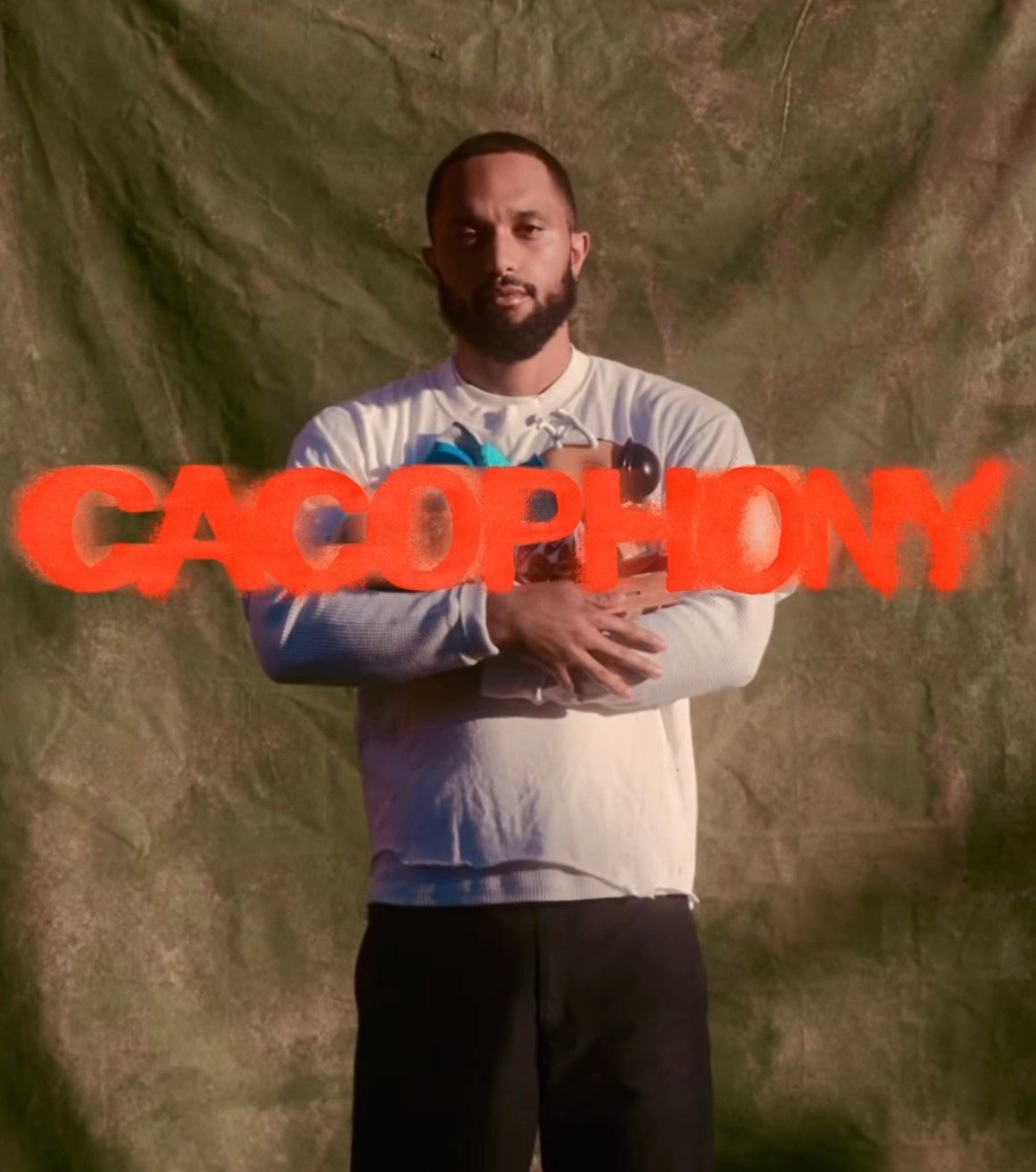
For Justin Scott, also known as STR33T, that sense of identity comes naturally.
Originally from Baltimore, Maryland, a city rich in artistic culture, the 24-year-old’s creative foundation is deeply rooted in his environment. From early moments dancing in his living room to developing his voice through poetry and spoken word, his upbringing made it clear that being an artist was always part of his path. After moving to Los Angeles at 15 and later graduating from UCLA with a degree in African American Studies, he stepped into a space that would further shape his purpose. With the encouragement of family, especially being pushed to define his “why”, Scott began to refine not just his sound, but his story.
Now, coming off his latest EP Cacophony, STR33T is ready to introduce himself on his own terms, showing us not only where he’s been, but where he’s going musically.
Ironically, before the project’s release on April 21st, we were both back in our hometowns. I got the chance to hop on a call with Scott and talk through the evolution of STR33T and the making of Cacophony.
*This interview has been edited and modified for clarification
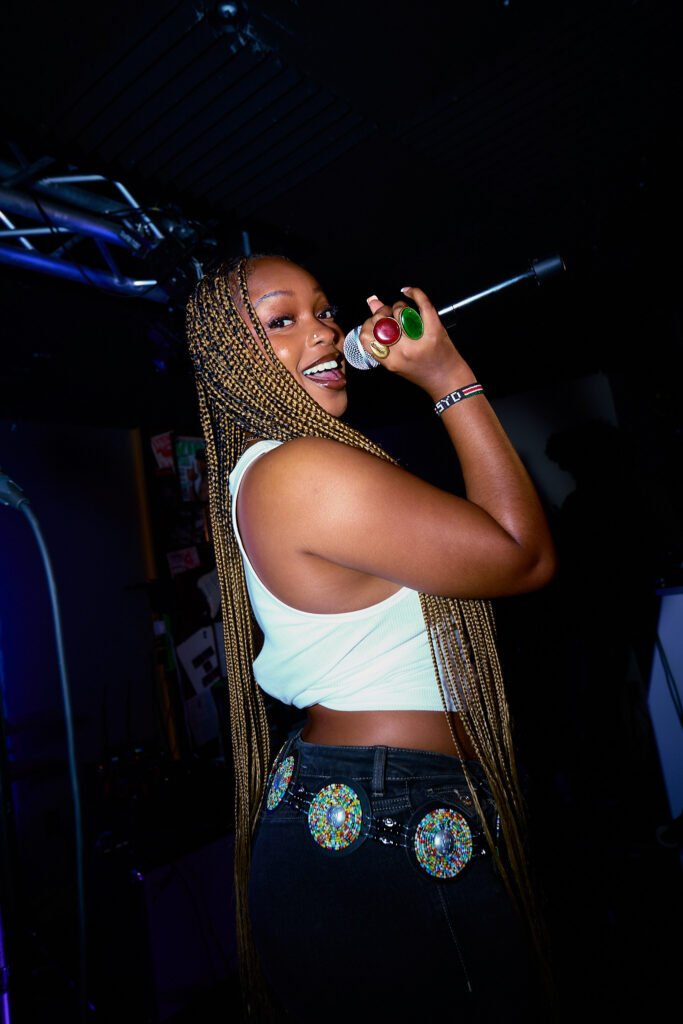
Sydney Wanguhu: Thank you again so much for taking the time to chat with me, especially while you’re traveling! How is home treating you?
STR33T: Good, good, good. Home is where the heart is, where the hatred is, where the bullshit, where the beauty is.
Sydney Wanguhu: As you’ve been soft-launching the EP since 2025, there’s been a whole rebrand on your socials, really establishing Justin as STR33T [the artist]. What’s the story behind the name?
Justin Scott: I am more than just a musician, so I’m like, what’s something that holds all aspects of culture? Because really, all art is about curating a cultural moment. Then, thinking about: what are the literal things that hold culture? Damn, where I’m from, [the] street. With geography being so important in my life and my development as a human, [from] the energy and influence that geographical space has on art and culture, Baltimore’s culture is heavily influenced by where the city is actually located on Earth [and] how the city looks. What’s really important to culture and geography? Streets. Every single hood in America has an MLK Boulevard. Again, thinking about Baltimore specifically, the Chitlin Circuit was the crux of whatever was going on musically at the time. While Baltimore was Pennsylvania Avenue, Harlem was 125th Street, and Bourbon Street in Louisiana. And I’m like, oh…Damn! I think of myself as a generational talent. I know that I possess the capabilities to really impact art and culture on a… grandiose scale. God willing, of course. Streets hold all aspects of culture; they’re really important to Black culture, to where I’m from, and it’s one syllable, like Prince. And [the number] 33 is a really important number in my life, which I continue to discover and find out about.
SW: That’s really dope for you to have a name that will always align with who you are now and where you’re going. [The] textbook definition of cacophony is a “harsh mixture of sounds,” almost with a negative connotation. How are you able to interpret that for yourself, and why do you feel like it fits best for this title?
JS: Did you read the definition number 2?
SW: Tell me.
JS: [Definition] two Is, like, the summation of that mixture. Cacophony is always used in the context of nature and [familiarity], like the Mandela Effect. Thinking and feeling like we know something, but really don’t. That [in itself] gives a really special opportunity to add a different context to something when someone already has a relationship with it, which is what some of my favorite art does. Like, the best songs have the simplest phrases we feel like we’ve heard a thousand times, but now it’s given new life through this song. I think about myself as a cacophony of so many different life experiences. I don’t know if you saw, but I posted on Instagram an excerpt from Harry Potter on where I landed on [Cacophony] as the title. [because] A lot of my work is about that inner child. That’s what music, art, life, and spirituality lead back to: the purest versions of ourselves. I posted, me playing a drum set as a kid that was in my living room. My mom wouldn’t get furniture in the living room so that I could play, thank God, because I was a hyper-ass kid, and my aunt DM’d me, like, yo, those drums drove me crazy. A noisy presence can be noisy because they actually make noise, but they also can be noisy because of their presence. Like, double entendre. The memories that they hold, and the things that we attach to them. So, each song on the project is a noisy present. I like to think of this as my first real introduction as an artist in terms of where I’m going musically. “Stay ( Los Leones)” is inspired by this trail that’s really important in my relationship with wifey. “Mumbo Jumbo”, [the phrase] has all sorts of negative racial connotations, [but] thinking about club music and [how] club music [in] Baltimore [was] birthed out of struggle and violence, and yet turned into pure joy. Each [song] has its own relic and memory attached to it.
SW: Yes, yes, yes, you touched on that in the intro to your INMYROOM performance, which was great by the way. It gave a sneak peek into the singles featured on the EP. My personal favorite is “Stay (Los Leones)”. I’m curious, what’s yours?
JS: My favorite is It’s “Thumb”. I just started posting snippets of it, [and] I think that’s like, the direction. Hopefully, God willing, inshallah, I’mma be putting out another EP towards the end of the year, and I feel like now that the taste tester is here, like, I’mma narrow it even a little more, at least for this era, and I feel like that sounds like. [But] “Thumb,” “Heartbreak Palace” and “Giants.”
SW: You mentioned your storytelling touches on these phases of adolescence. What other themes will be discussed in the project?
JS: A lot of songs are really about self-discovery. Even if it’s framed in terms of love, sex, the relationship with God, all things bigger than us, me feeling really comfortable with myself, and going through these experiences learning different aspects of myself, all leading up to this point where I’m surrendering, even if I don’t like it. Which is why the project ends with Heartbreak Palace. Just because something ends in the way you didn’t want it to, doesn’t mean that it’s [not] what you needed, or that you can’t find resolution or peace in it.
SW: Throughout this album specifically, you’re wearing all hats, from producing, songwriting, and executing. Were there any highlights that stuck with you or challenges you faced during this project?
Justin Scott: Good question. I feel like the biggest challenge [was] surrendering. I like control, but I realized very early on that if I really want this project to be the best representation of me at this moment, I’ve got to let God work so the stories can be honest. I wrote Heartbreak Palace in 10 minutes; it was damn near freestyle! I was able to process the emotions that I had at that time to understand them while not being super attached [while writing]. It’s hard to write sometimes from a place where you’re still in the middle of the storm. I don’t know if I can highlight one particular moment, but “Heartbreak Palace” was amazing. “Thumb” was also super, easy, and fun. “Mumbo Jumbo” was a great homage to where I’m from, and I feel like it’s this is the beginning of me tapping into that. [I believe ] a lot of our brilliance in life as humans lies in when we recontextualize the things that we first encountered as kids. I’m never going to forget– it’s my musical foundation.
SW: Yep, that’s STR33T Mewsik for ya.
JS: Core STR33T Mewskic.
SW: When I listen to a project for the first time, I take it all in, have my thoughts, and then go back into it with completely different thoughts. What would you like people to take away from their first listen, compared to the second or third time?
JS: Once it’s out in the world, it’s not mine anymore, but I would hope people look in the mirror a little bit. I think that’s why I love the song Thumbs so much, because it takes a very special moment for anyone, especially man, to relinquish control. I’m Muslim, and being Muslim literally means to be obedient. [While] thinking about that when writing that song, I had that concept of what it’s, like, being under somebody’s thumb– being under somebody’s control. What does it take for somebody to really get there with that? That’s true devotion. I hope that people can ask those questions of themselves. But I’m more curious to hear [ people’s] thoughts. That’s the beauty of it for me, you know?
SW: Haha, great PR Answer.
JS: That’s just the real answer, man!
For more updates on STR33T and his music, follow him on Instagram.
I hope you enjoyed the read! For more content, follow me on Instagram and Spotify:@sydneyy._
Leave a Reply